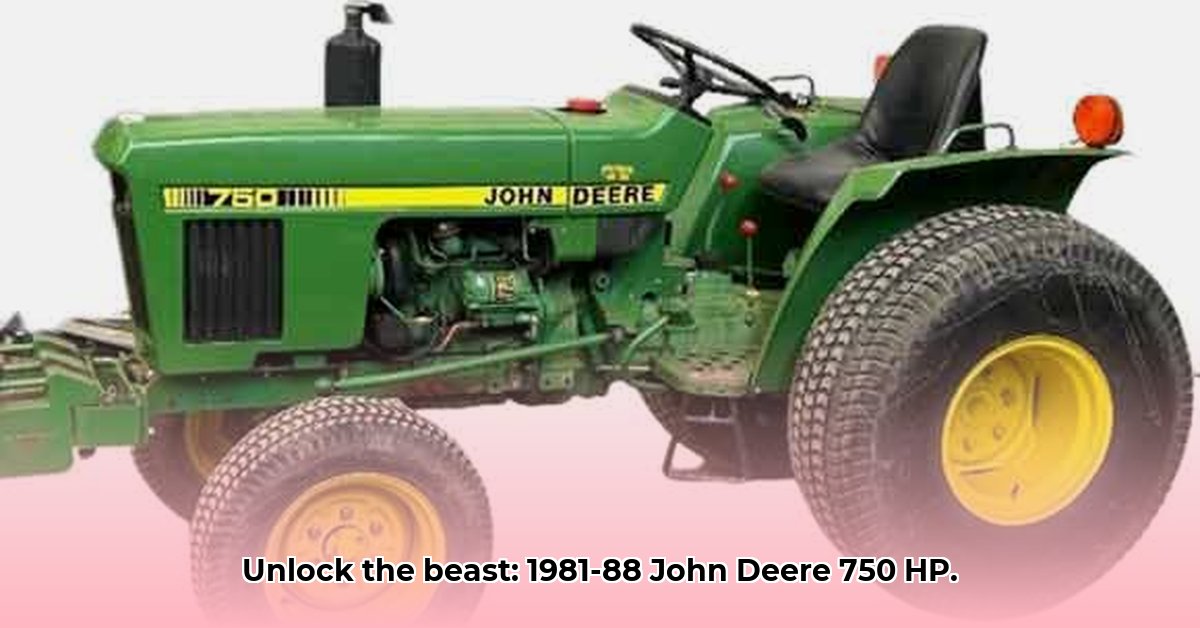
John Deere 750: A Yanmar-Built Classic
The John Deere 750, a compact tractor produced from 1981 to 1988, represents a fascinating chapter in agricultural machinery history. Manufactured by Yanmar and marketed by John Deere, this workhorse offers a blend of robust simplicity and intriguing design quirks. While less powerful than modern counterparts, its compact size and dependable nature make it a desirable machine for smaller properties or vintage tractor enthusiasts. This article delves into the 750's technical specifications, historical context, operational characteristics, and its current value for collectors and restoration projects. For a comparison in size, see the largest John Deere tractors here.
Technical Specifications and Design
The John Deere 750's heart is a Yanmar 3T80 three-cylinder diesel engine. While precise horsepower figures vary across sources (likely due to different testing methods and engine condition), it generally produced around 20 gross horsepower. This power, transmitted through an 8-speed manual transmission, proved sufficient for various tasks on smaller properties. The open-center hydraulic system, common for compact tractors of that era, provided the necessary power for implements.
Data discrepancies are common across various sources for vintage tractors such as this. Minor variations in models produced within the production years could account for some inconsistencies in reported weight (approximately 2000 lbs), fuel tank capacity (around 6.2 US gallons), and dimensions, which are unavailable in accessible documentation.
Here's a summary of the key specifications:
| Specification | Value | Notes |
|---|---|---|
| Engine | Yanmar 3T80 | Three-cylinder, naturally aspirated diesel; known for reliability. |
| Horsepower (Gross) | ~20 hp | PTO horsepower likely slightly lower; variations exist across sources. |
| Transmission | 8-Speed Manual | Offered a good range of gear ratios for diverse tasks. |
| Hydraulics | Open-center | Simple, effective design typical for compact tractors of the era. |
| Weight (Approximate) | ~2000 lbs | May vary depending on options and condition. |
| Fuel Tank Capacity | ~6.2 US gallons | Minor discrepancies exist across different information sources. |
Historical Context and Market Position
The John Deere 750's production run (1981-1988) coincided with a period dominated by smaller, family-run farms. Its compact size and manageable power made it an ideal choice for landowners with less extensive acreage. Although precise original pricing is difficult to ascertain due to inflation and regional variations, estimates range from approximately $7,000 to $10,000. This range reflects the variations in options and the condition of the machines at the time of sale. The 750 offered an affordable and practical solution, representing a sensible investment for a wide range of users.
Operational Characteristics and Performance
How did the 750 perform in the field? It handled typical tasks such as mowing, tilling, and operating smaller implements with ease. While not a powerhouse, its dependability and efficiency within its power range were key strengths. While power steering was not standard, it was an available option, making maneuvering easier. In comparison to current compact tractors, the 750 offers a less refined ride, potentially requiring more operator input and skill. Fuel efficiency, compared to modern machines, may also be lower. However, its simple design and robust build ensured reliable operation. How would you describe the key performance differences between modern compact tractors and the 750?
Parts Availability, Maintenance, and Restoration
Maintaining a vintage tractor presents challenges. Parts availability can be an issue - online marketplaces, specialized dealers, and even resourceful repurposing of existing components and parts (using 3D printing where available) become crucial. Regular maintenance is paramount for prolonging the tractor's lifespan. Preventive measures (like regular oil changes and inspections) significantly reduce the risk of costly repairs. For restoration projects, patience, mechanical skills, and access to appropriate parts are essential. This commitment, however, is often rewarded with a well-functioning and historically significant machine. Is the effort of restoring a John Deere 750 worth it?
Collector's Value and Appraisal
The John Deere 750 is gaining traction among vintage tractor enthusiasts. A well-restored and maintained example can command a respectable price in collectors' markets. Its historical significance, combined with the satisfaction derived from restoring such a machine, appeals to those seeking more than just a functional tool, but a piece of agricultural heritage. The value can vary considerably based on condition, originality, and completeness.
Conclusion: A Lasting Legacy
The John Deere 750, though a product of a bygone era, holds a distinctive place in the history of compact tractors. Its robust design, reliable performance (within its capabilities), and enduring appeal among collectors ensure its legacy. It stands as a testament to the enduring practicality and often surprising desirability of vintage agricultural machinery. What aspect of the John Deere 750's history or design do you find most compelling?